
Diabetic Keratopathy
Diabetic keratopathy (DK) is a common ocular complication of diabetes characterized by persistent epithelial defects, reduced corneal sensitivity, and impaired wound healing. DK often presents as increased epithelial fragility, secondary scarring, punctate keratopathy, and corneal edema. Additional complications can include surface irregularities, infections, and stromal opacifications.
Loss of corneal sensitivity is driven by hyperglycemia-induced reductions in corneal innervation. This decrease in sensory nerve function reduces reflex tear production and blink rate, increasing tear evaporation and contributing to dry eye disease in diabetic patients.
Model Overview
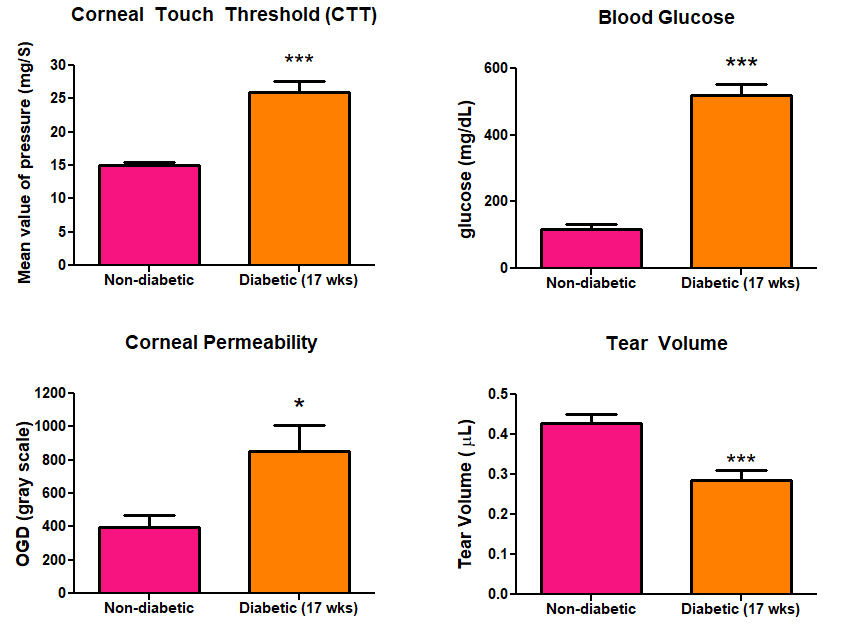
EyeCRO utilizes established diabetic models that recapitulate key ocular surface complications observed in diabetic patients, including reduced corneal sensitivity, epithelial barrier dysfunction, and delayed wound healing. Sustained hyperglycemia in these models leads to progressive corneal nerve loss, tear film instability, and impaired epithelial regeneration.
These models are particularly suited for evaluating therapies targeting corneal nerve repair, epithelial healing, anti-inflammatory mechanisms, and restoration of ocular surface homeostasis. Standardized injury paradigms, such as controlled corneal epithelial debridement, can be incorporated to assess wound healing dynamics under diabetic conditions.
Typical Endpoints
- Corneal sensitivity
- Corneal nerve density
- Corneal permeability
- Tear volume measurement
Representative Data
Interested in this model?
We are happy to share more about study design options, endpoints, or timelines.
Contact us to discuss your study goals.