
Bioanalytical & Biochemistry Services
EyeCRO’s dedicated bioanalytical laboratory operates alongside our in-life research teams, providing a fully integrated platform from dosing to quantification without delays, sample degradation risks, or coordination across vendors.
Our facility offers analytical expertise with cell culture samples, mouse, rat, and rabbit tissues and fluids, with the capability for rapid method development and high-throughput CRO studies.
Core Platform
Waters Xevo TQ-S Micro LC-MS/MS
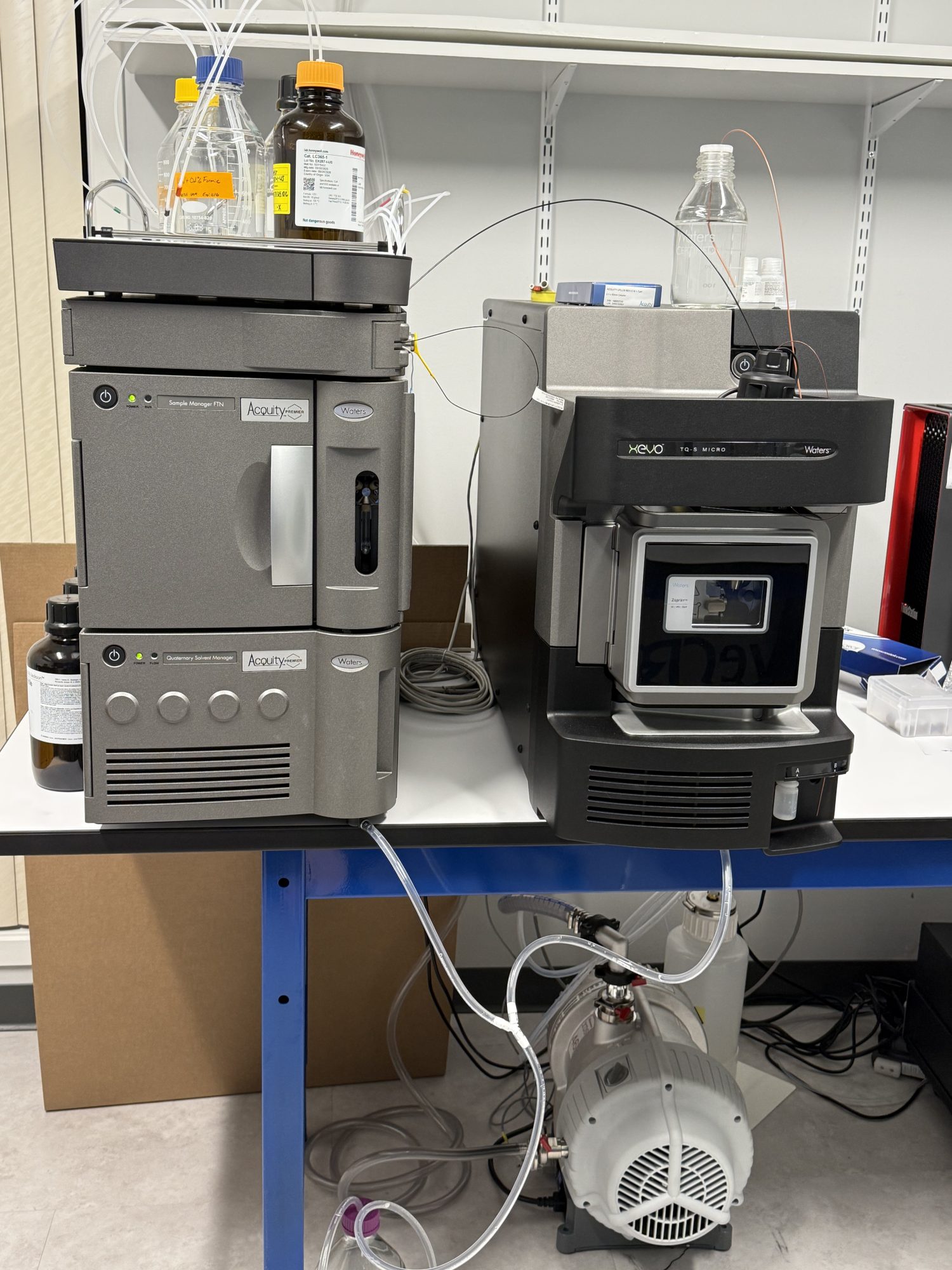
EyeCRO’s bioanalytical platform is built around the Waters Xevo TQ-S Micro tandem quadrupole mass spectrometer. The Xevo TQ-S Micro delivers high-sensitivity quantitative bioanalysis with up to 500 MRM transitions per second and six orders of linear dynamic range.
Our targeted MRM methods provide extreme selectivity and sensitivity for quantitation of drugs, biomarkers, and metabolites in ocular matrices. Quantitation is validated with 12 to 20 point standard curves per analyte, with typical R² values of 0.997 or higher. EyeCRO historically maintains less than 5% CV on A2E quantitation, well within FDA and EMA bioanalytical guidance requirements.
500/s
MRM transitions per second
6 orders
Linear dynamic range
≥0.997
Typical R² standard curve
<5% CV
A2E quantitation (historical)
Automated Sample Preparation
Precision at Every Step
Sample preparation is automated to eliminate manual pipette variability and ensure reproducible results across every study.
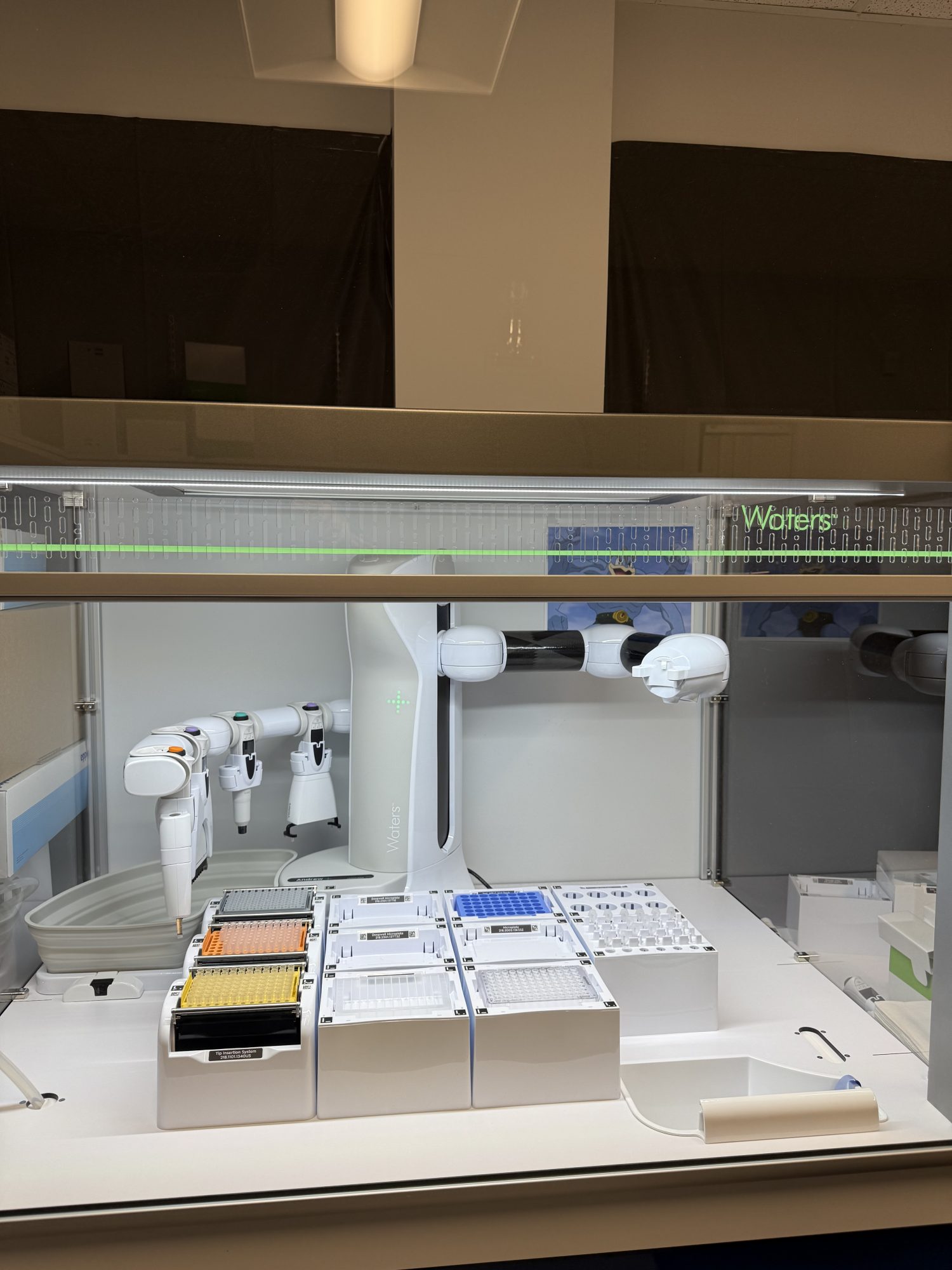
Waters Andrew+ Robotic Pipetting System
Reduces manual pipette time and user variability for consistent standards and results. Compatible with shakers, heaters, magnetic modules, and Waters Express Digest Kits for peptide digestion workflows.
Qiagen TissueLyser III
High-throughput tissue homogenization enabling efficient and standardized processing of small ocular tissue samples.
Analytical Workflows
Three Core LC-MS/MS Workflows
EyeCRO supports three validated analytical workflows designed specifically for the challenges of ocular matrix analysis.
Workflow 01
Small Molecule Analysis
Protein precipitation followed by SPE or liquid-liquid extraction, reverse-phase UPLC separation, and targeted MRM quantitation.
Workflow 02
Lipidomic Analysis
Folch or Bligh-Dyer extraction with species-level separation via reverse-phase or HILIC chromatography for lipid mediator profiling.
Workflow 03
Proteomic Analysis
Tryptic digestion with RapiZyme, SPE cleanup, and targeted MRM quantitation of peptide surrogates. Compatible with Andrew+ automated digestion.
Complementary Capabilities
Biochemistry & Molecular Analysis
Our biochemistry capabilities complement the mass spectrometry platform with a broad range of molecular and protein-level assays.
Analytical Validation Standards
All bioanalytical methods are validated to FDA and EMA bioanalytical guidance requirements.
Representative Data
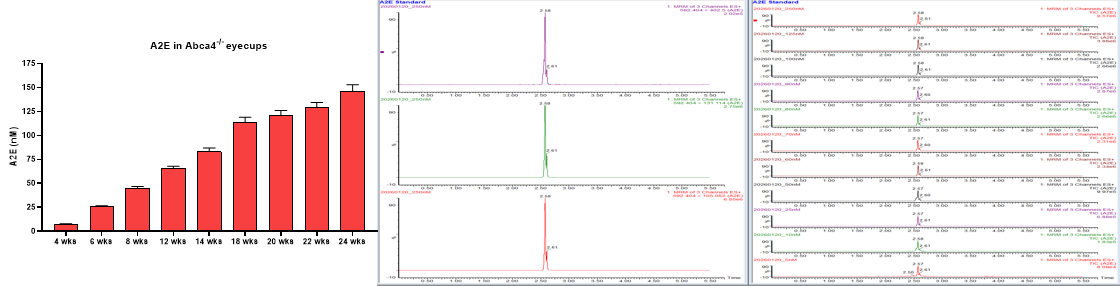
A2E Quantification in Abca4-/- Eyecups
Representative data from EyeCRO’s validated A2E quantitation assay.
Interested in our bioanalytical capabilities?
Contact us to discuss how our bioanalytical and biochemistry services can support your ophthalmic program.
Contact Us