
MNU-induced Retinal Degeneration
Retinal degenerative diseases characterized by photoreceptor loss, such as retinitis pigmentosa, remain a leading cause of inherited blindness. Rapid and reproducible chemically induced models of photoreceptor degeneration are valuable tools for screening neuroprotective and regenerative therapeutic candidates on accelerated timelines.
Model Overview
N-methyl-N-nitrosourea (MNU) is a potent alkylating agent that drives reproducible photoreceptor degeneration of the retina. Following systemic administration, MNU incudes rapid DNA damage, triggering apoptosis primarily in rod photoreceptors, with secondary cone degeneration occurring thereafter.
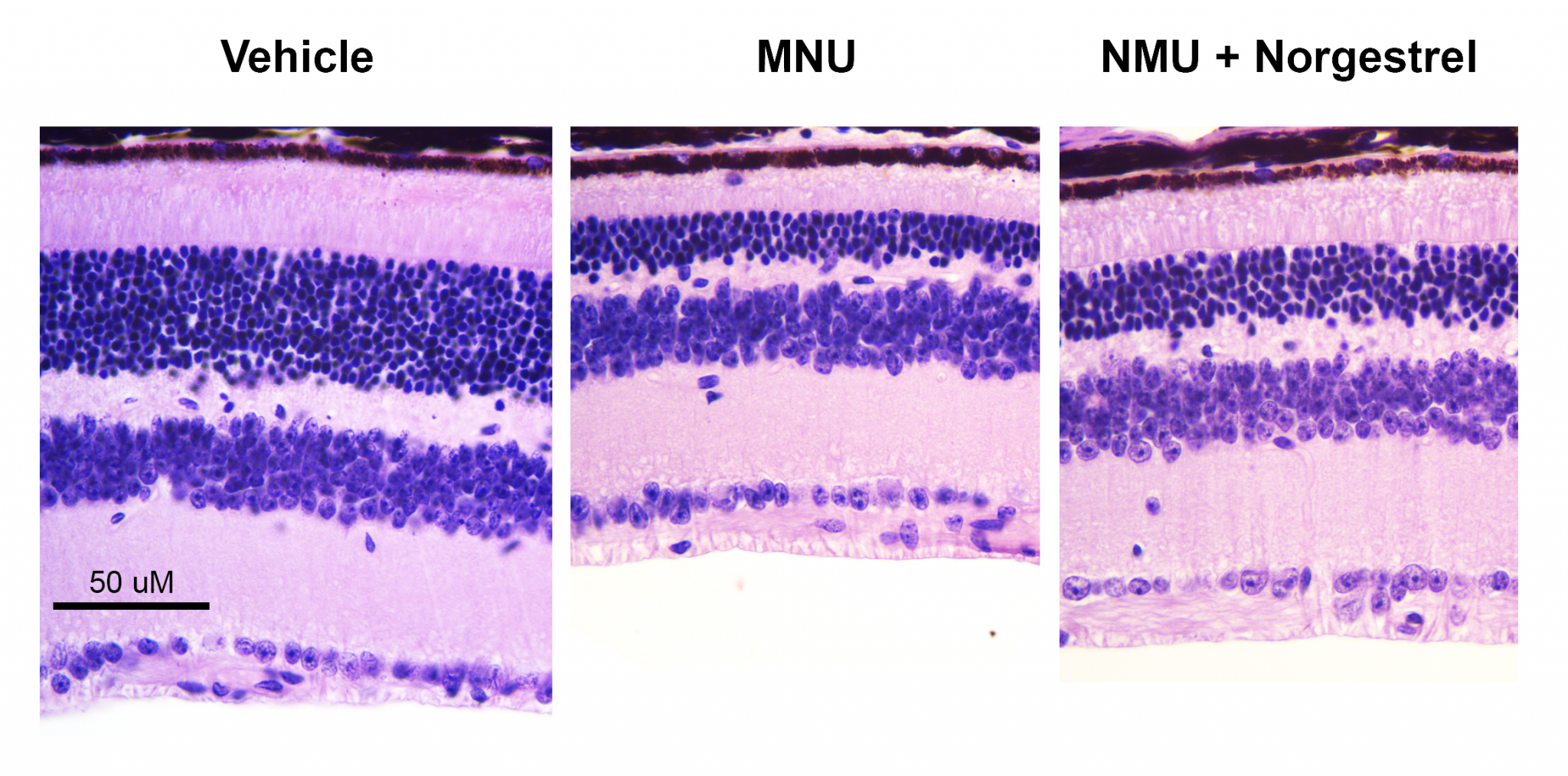
Following systemic administration of MNU, photoreceptor degeneration progresses quickly, leading to marked thinning of the outer nuclear layer and loss of visual function. The model is highly reproducible and dose-dependent, making it well-suited for efficiently screening therapeutic candidates targeting photoreceptor survival.
Typical Endpoints
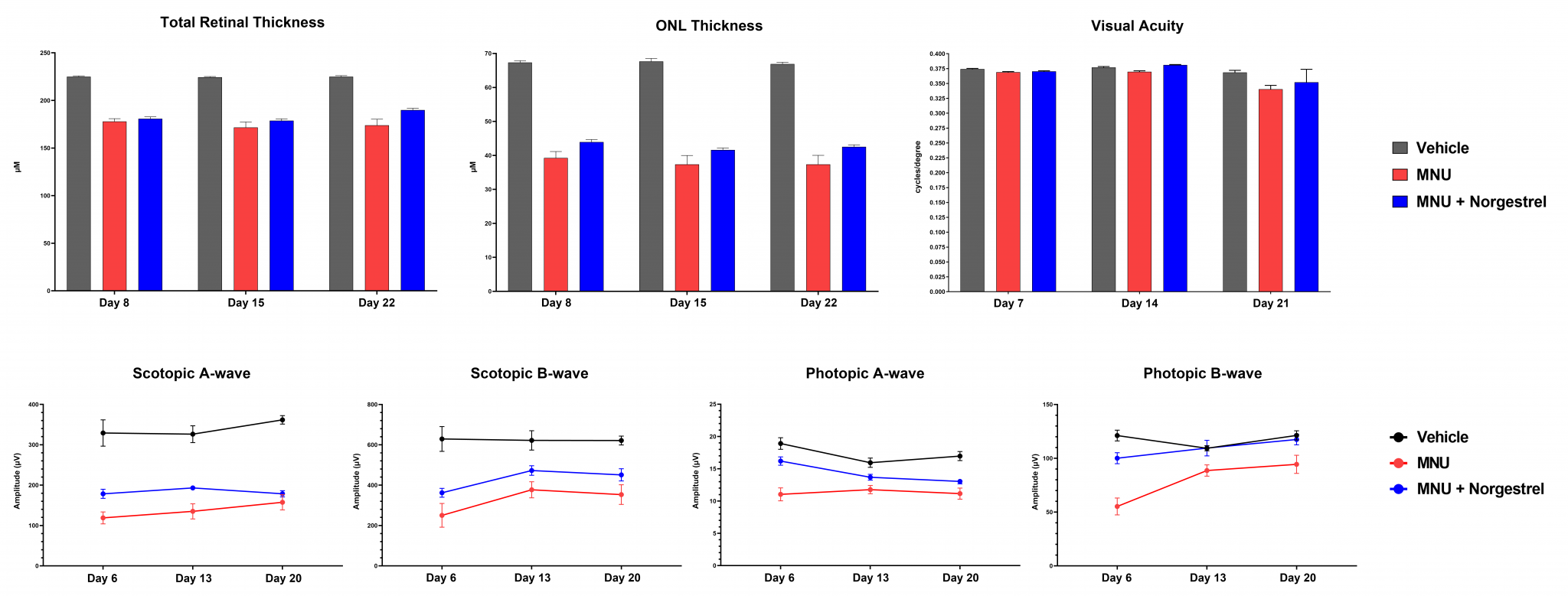
- OCT imaging (outer nuclear layer and total retinal thickness)
- Full-field ERG (scotopic and photopic responses)
- Optokinetic tracking (visual acuity)
- Histopathology (H&E, photoreceptor layer assessment)
Representative Data
Interested in this model?
We are happy to share more about study design options, endpoints, or timelines.
Contact us to discuss your study goals.