
STZ-induced Diabetic Retinopathy
Diabetic retinopathy is one of the leading causes of vision loss in working-age adults worldwide. The disease is characterized by progressive vascular pathology, inflammation, and neuronal dysfunction in the retina driven by chronic hyperglycemia. Diabetic macular edema, a related condition, further contributes to central vision loss. Regulatory endpoints for clinical trials focus on quantitative measurements of visual acuity and contrast sensitivity, making functional animal models essential for preclinical screening.
Model Overview
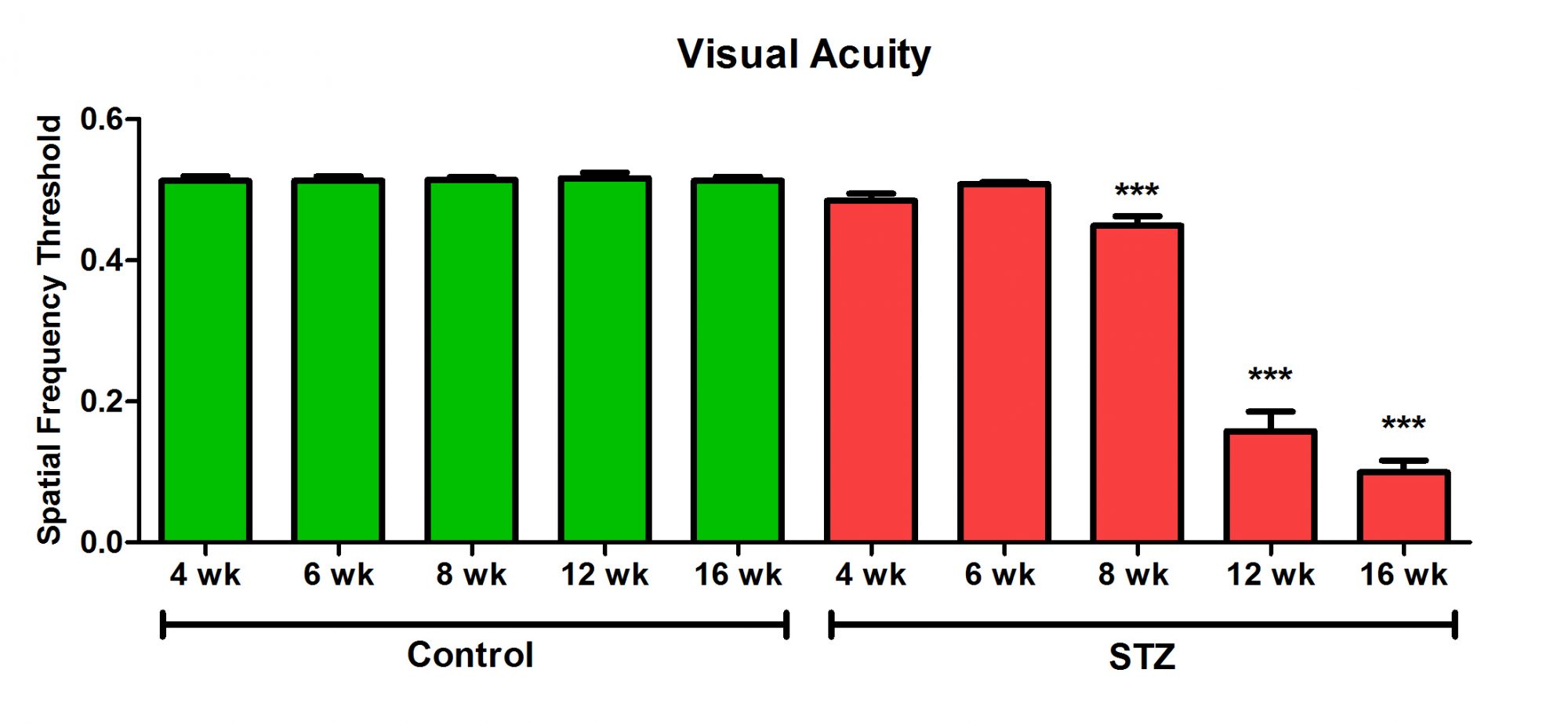
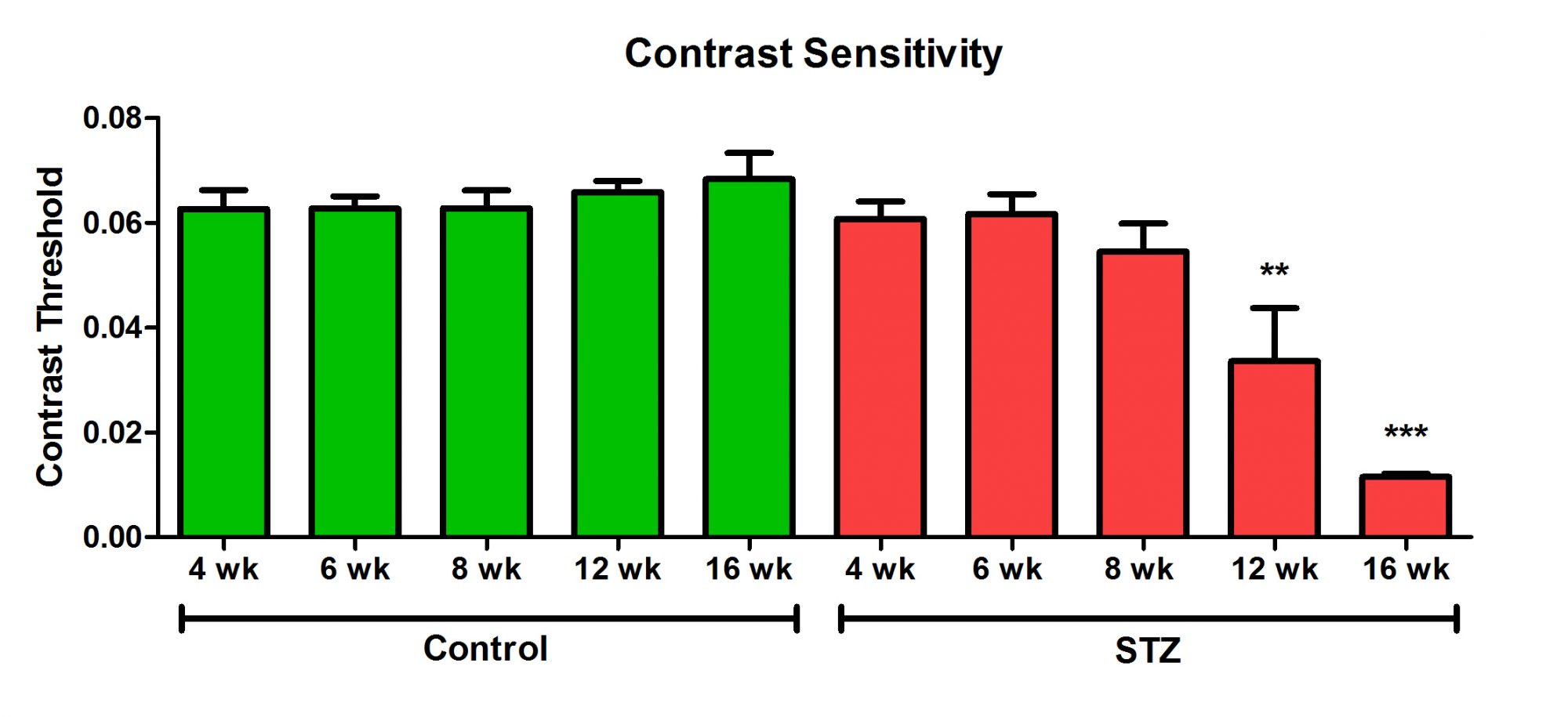
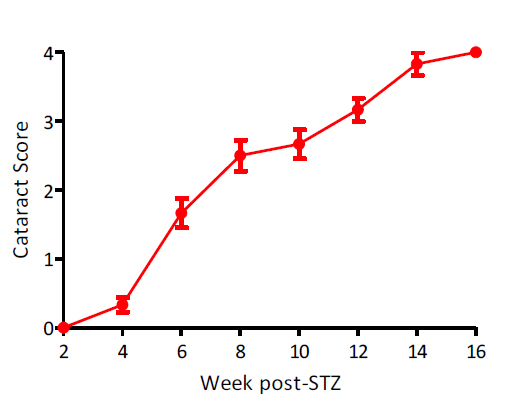
Streptozotocin (STZ) is a small molecule that causes depletion of pancreatic islet cells following systemic administration to rodents, leading to loss of insulin production and subsequent hyperglycemia within days. EyeCRO has shown that this model presents with an ideal phenotype for screening therapeutic efficacy: beginning at 8 weeks following induction of diabetes, there is a significant and progressive loss of visual acuity and contrast sensitivity, which can be rescued by subcutaneous implant of a slow-releasing insulin pellet. The model is also useful for evaluating the effect of an agent on diabetes-induced cataracts.
Typical Endpoints
- Optokinetic tracking (visual acuity and contrast sensitivity)
- ERG (including oscillatory potentials)
- Cataract scoring
- Blood glucose monitoring
Representative Data

Interested in this model?
We are happy to share more about study design options, endpoints, or timelines.
Contact us to discuss your study goals.